+ WHAT?
Exploring how immersive 3D audio and environmental storytelling transform perception and audience engagement through radical listening.
+ HOW?
Combining artistic experimentation and technological innovation to study how spatialized sound shapes cognition and emotion.

FORCE IS PRESENT
FORCE IS PRESENT
FORCE IS PRESENT
FORCE IS PRESENT
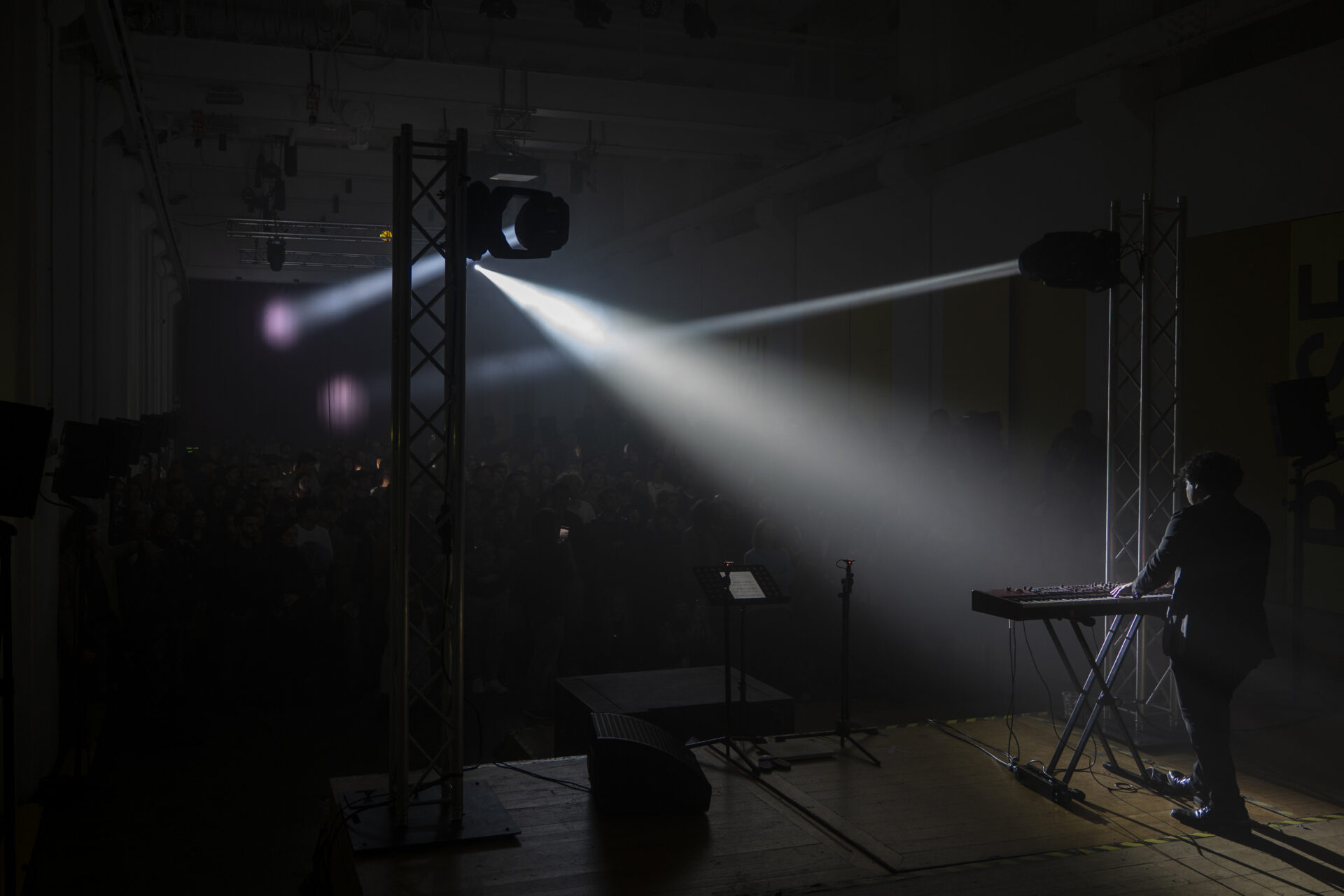
FORCE IS PRESENT

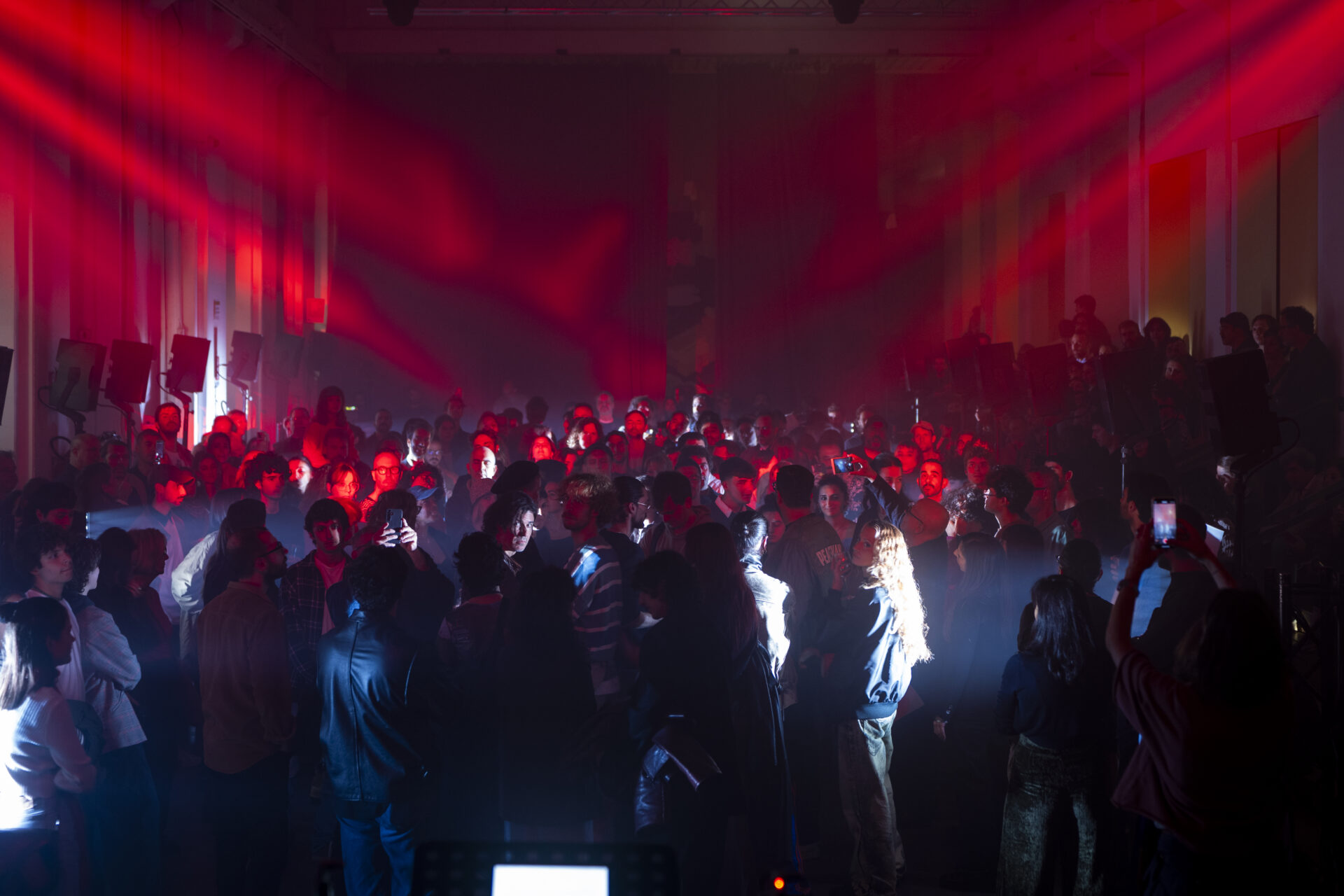
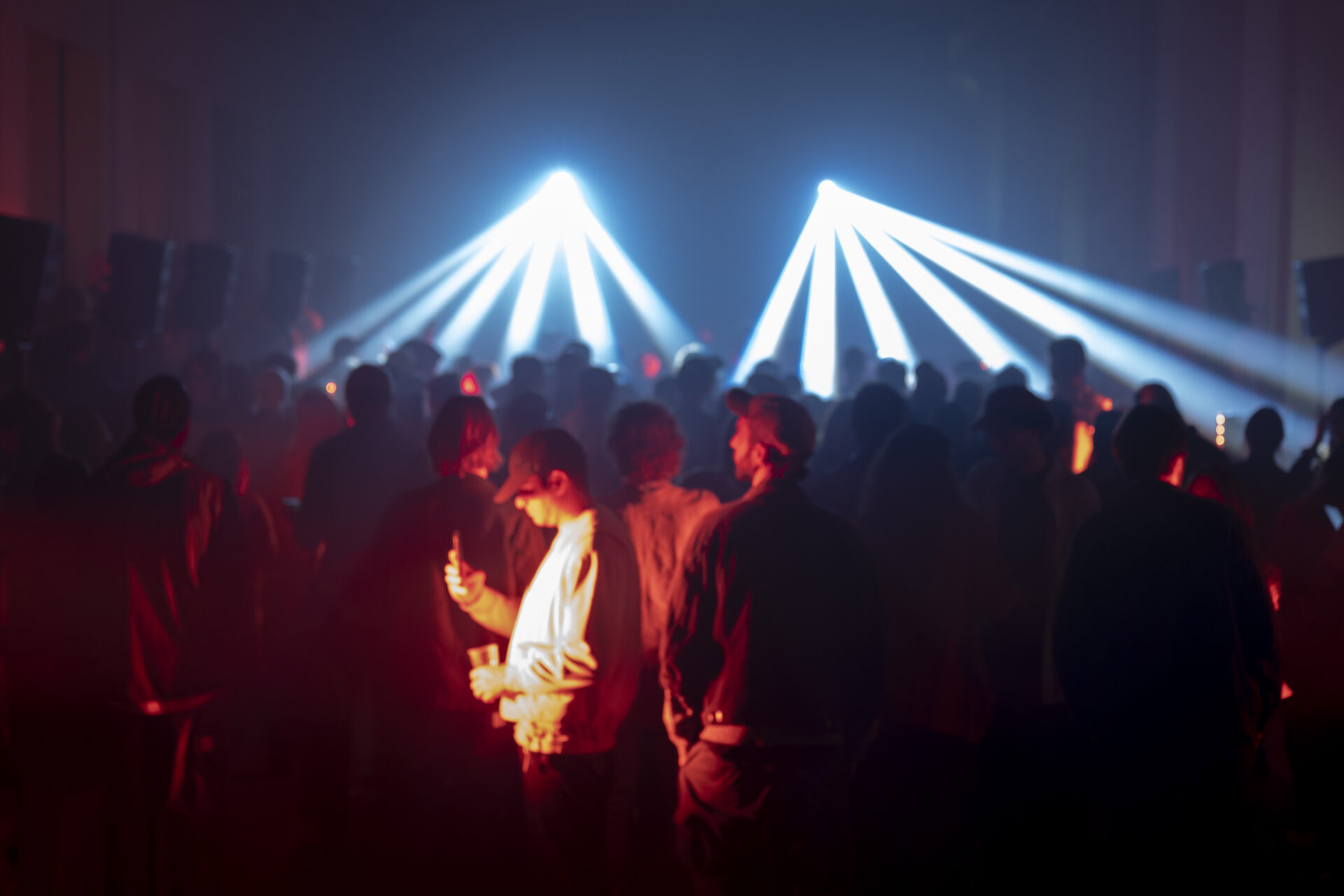
SOUND OF STORY is an artistic research cluster that combines the new 3D-Audio creation FORCE IS PRESENT with micro-studies to investigate the interactions between perception and narration in immersive 3D audio soundscapes. The project aims to develop new performance formats through Environmental Storytelling and novel roles for audiences, challenging conventional modes of listening and engagement (Radical Listening). By integrating artistic practice and artistic research, SOUND OF STORY seeks to deepen understanding of how spatialized sound can influence cognition, emotion, and social perception.
Artistic Work: FORCE IS PRESENT
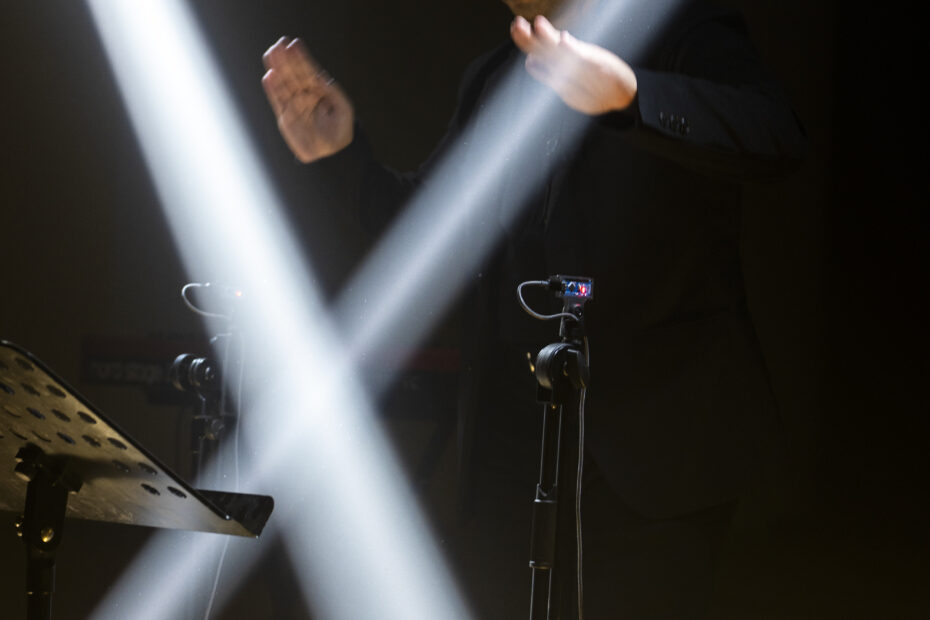
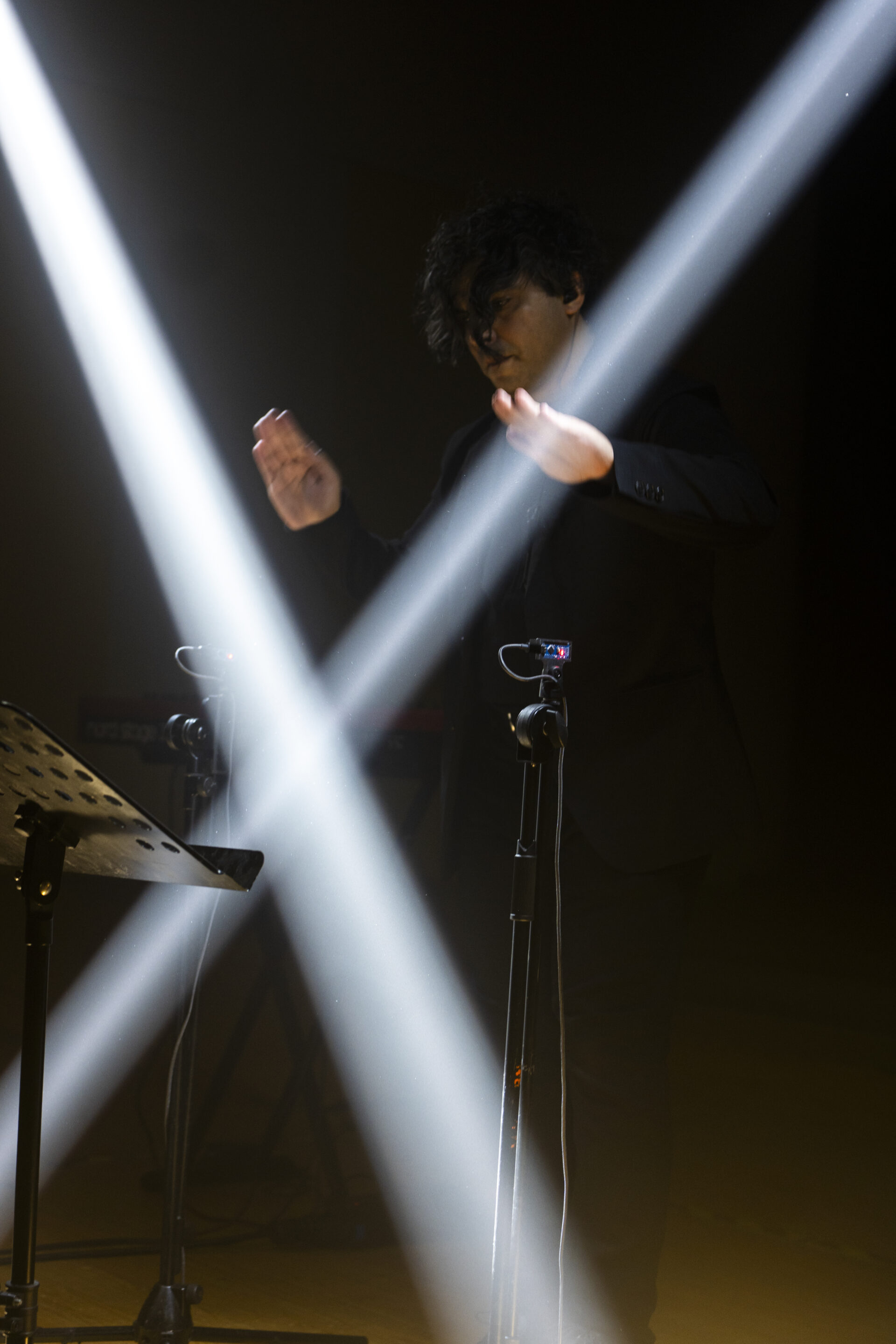
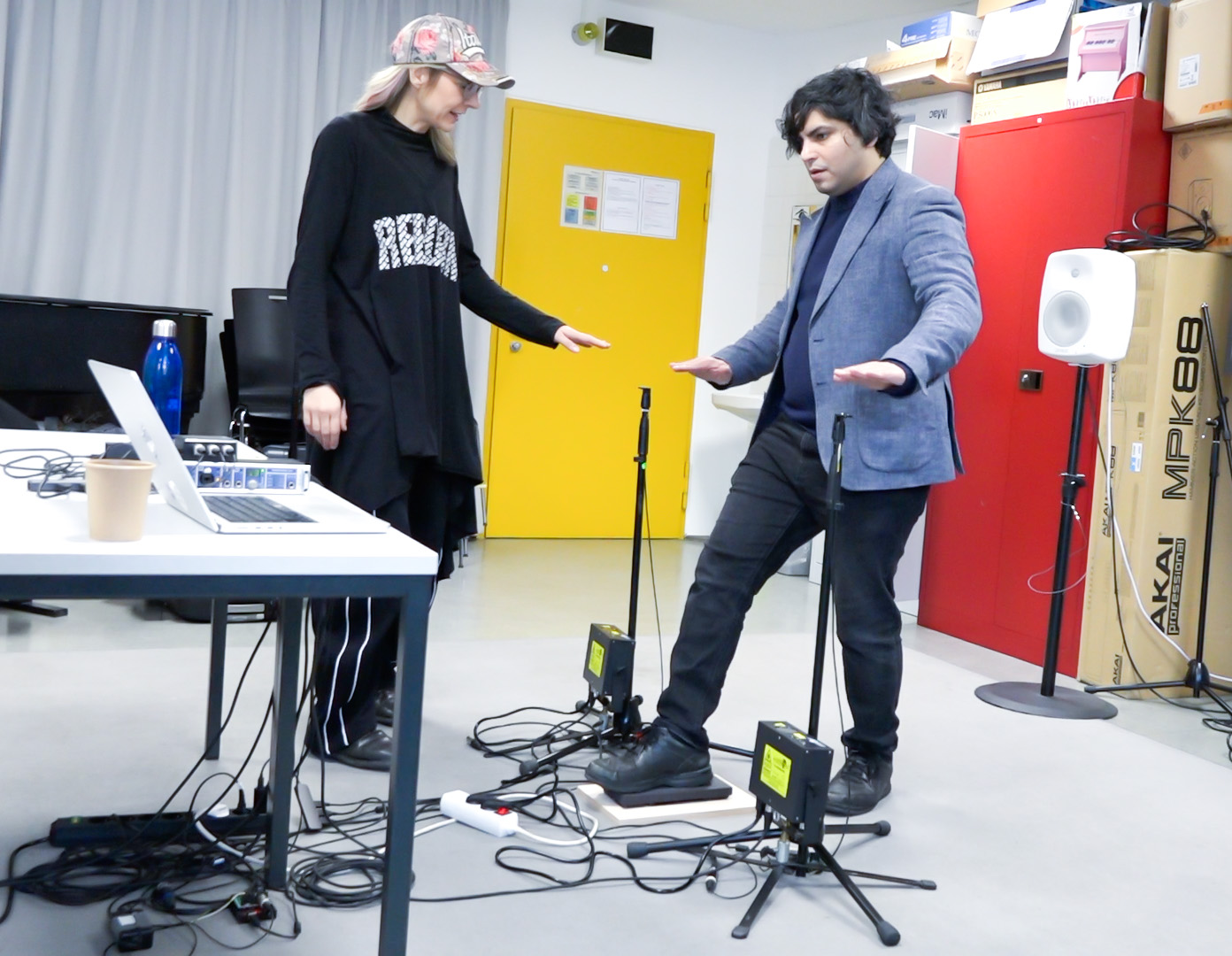
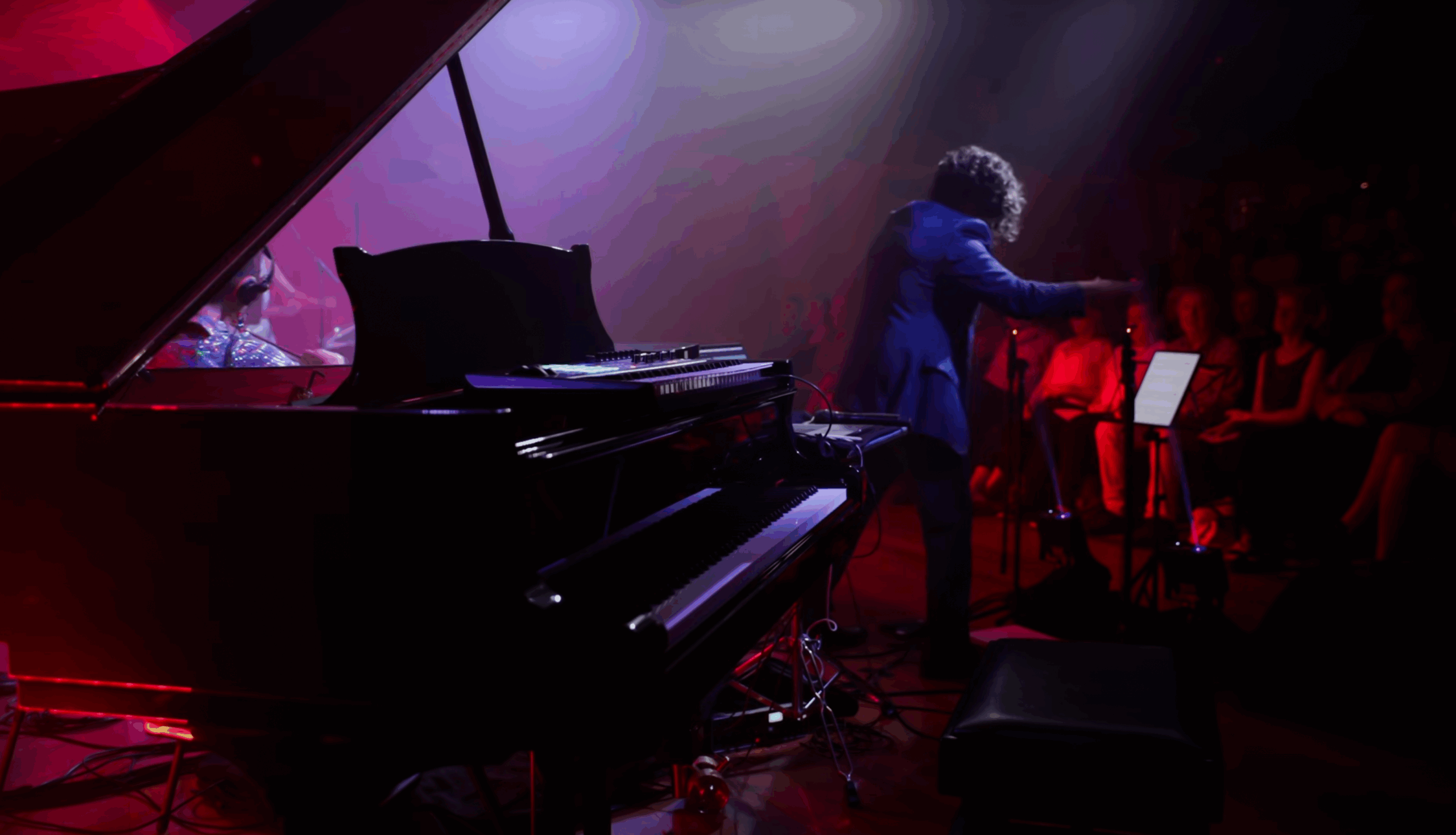
A sonic performance and audiovisual experiment that intertwines technology, social fragility, and an acoustics of power and vulnerability. FORCE IS PRESENT challenges perception by creating an experience through 3D audio and environmental storytelling, inviting audiences into an act of radical listening. The work explores the mechanisms of violence in two situations—through the body’s absence and presence. On stage, no traditional instrument is played: a pianist generates sound solely through the force of gestures, acting independently of the instrument. Specially developed distance-MIDI controllers trigger sound via light barriers, creating a physical momentum and a narrative in which music becomes an invisible force. The performance questions whether music and concert experiences can become spaces for understanding the dynamics of power and violence, and how spatialized oscillations and rhythms can destabilize inner order. FORCE IS PRESENT is more than a concert: it is a cultural and perceptual device that interrogates how technology and society reshape the capacity to experience, understand, and coexist within complex systems of power.
Collaborations
Artistic Collaborations:
– Brigitta Muntendorf, Artistic direction / Composition
– Lukas Nowok, programming
– Zubin Kanga, piano performer
– Lena Weckerling, light
– Banu Sahin, 3D-Audio Operator
Partner:
– d&b audiotechnik GmbH
– Vienna Festival (performance 05/2026)
Interviews, Dialogue-Partners:
– Beatrice de Gelder, Brain and Emotion Laboratory / Cognitive Neuroscience, Maastricht University
– Antonio Camurri, Casa Paganini Research Centre, UNIGE
– Prof. Dr. Stefan Malthaner, Hamburger Institut für Sozialforschung – Ralf Zuleeg, d&b Audio GmbH
3D audio, environmental storytelling, radical listening, gesture-based performance, spatial sound technology, interdisciplinary artistic research, cognitive perception, power and vulnerability
Design Methods & Frameworks
In Brigitta Muntendorf’s 3D Audio work FORCE IS PRESENT, the central objective was to enable the pianist to generate piano sounds without the physical instrument, relying exclusively on the kinetic force and precision of pianistic playing gestures. The system was designed to fulfill the following criteria:
a. gesture-to-sound triggering without perceptible latency and with high musical accuracy,
b.purely gestural interaction, without auxiliary devices such as controllers,
c. low-cost and reproducible construction, and
d. applicability within standard stage environments, without the need for specialized technical infrastructure.
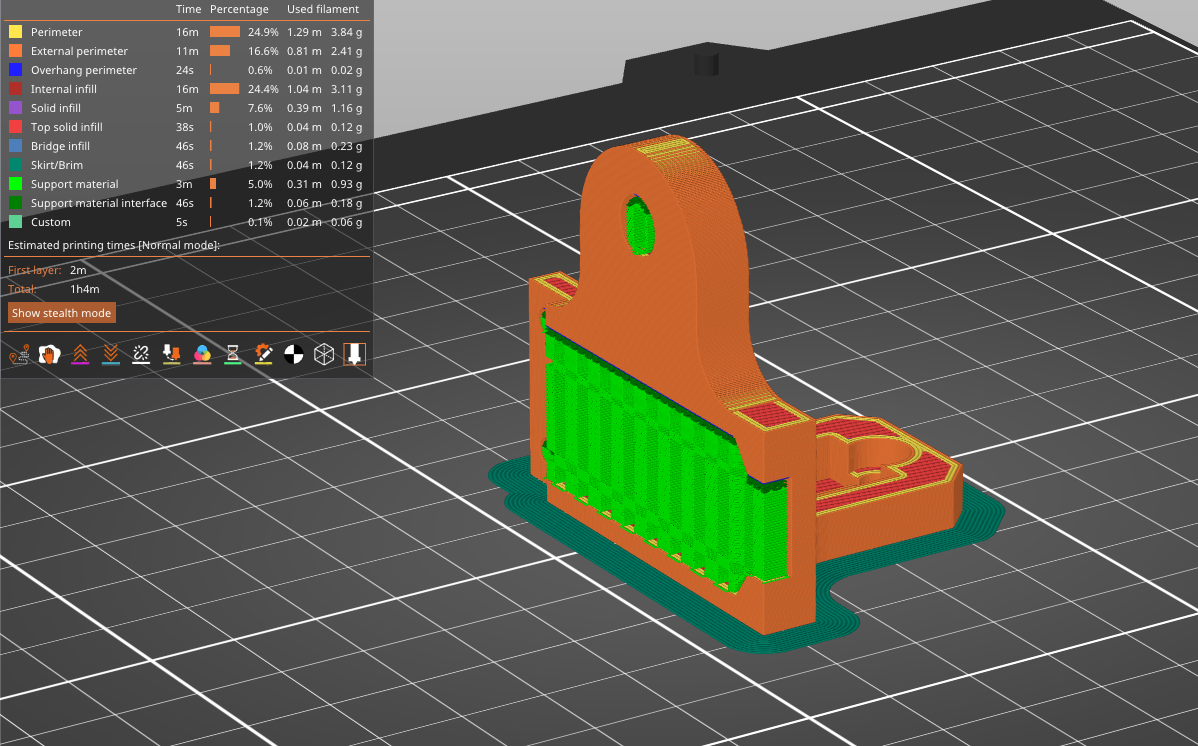
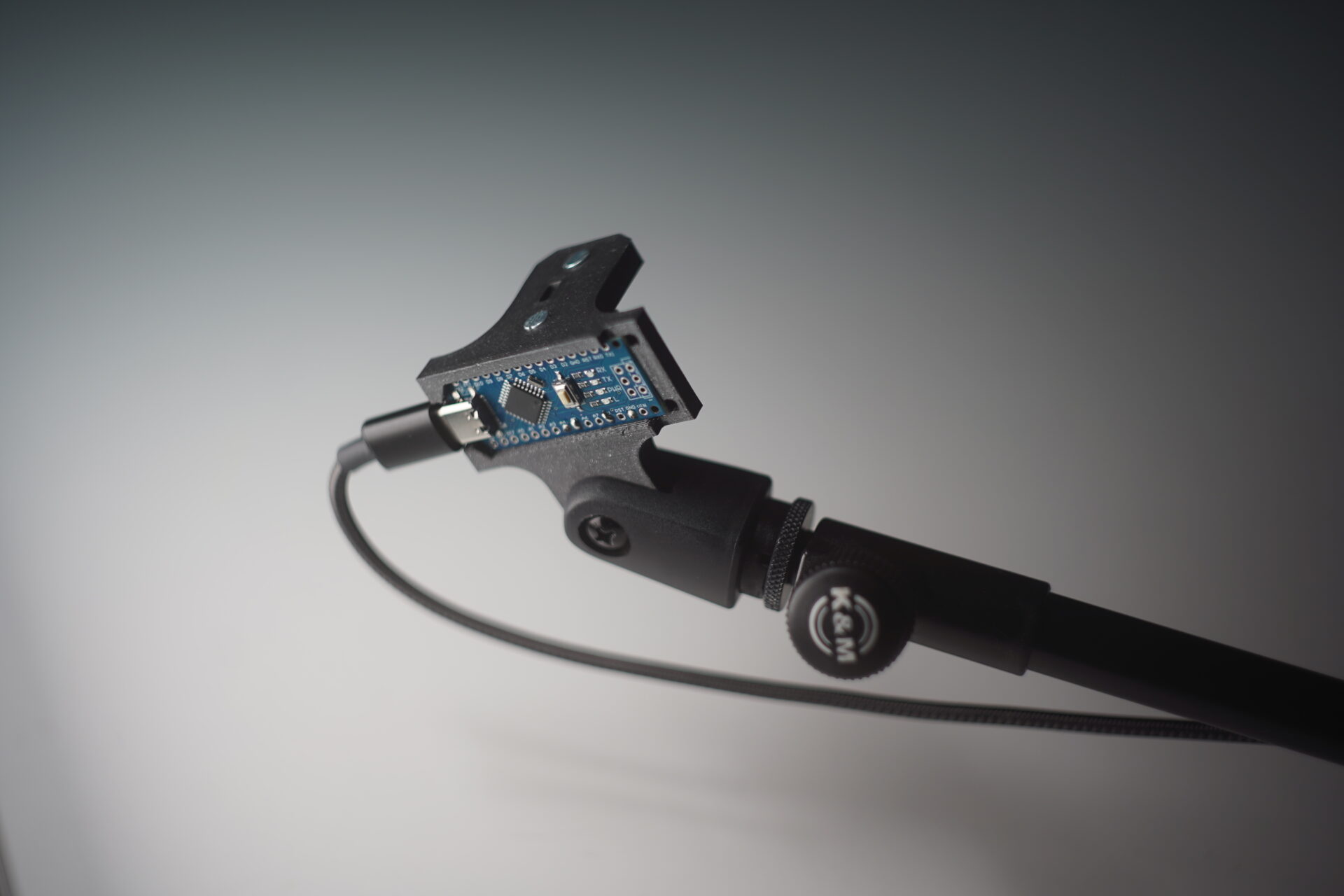
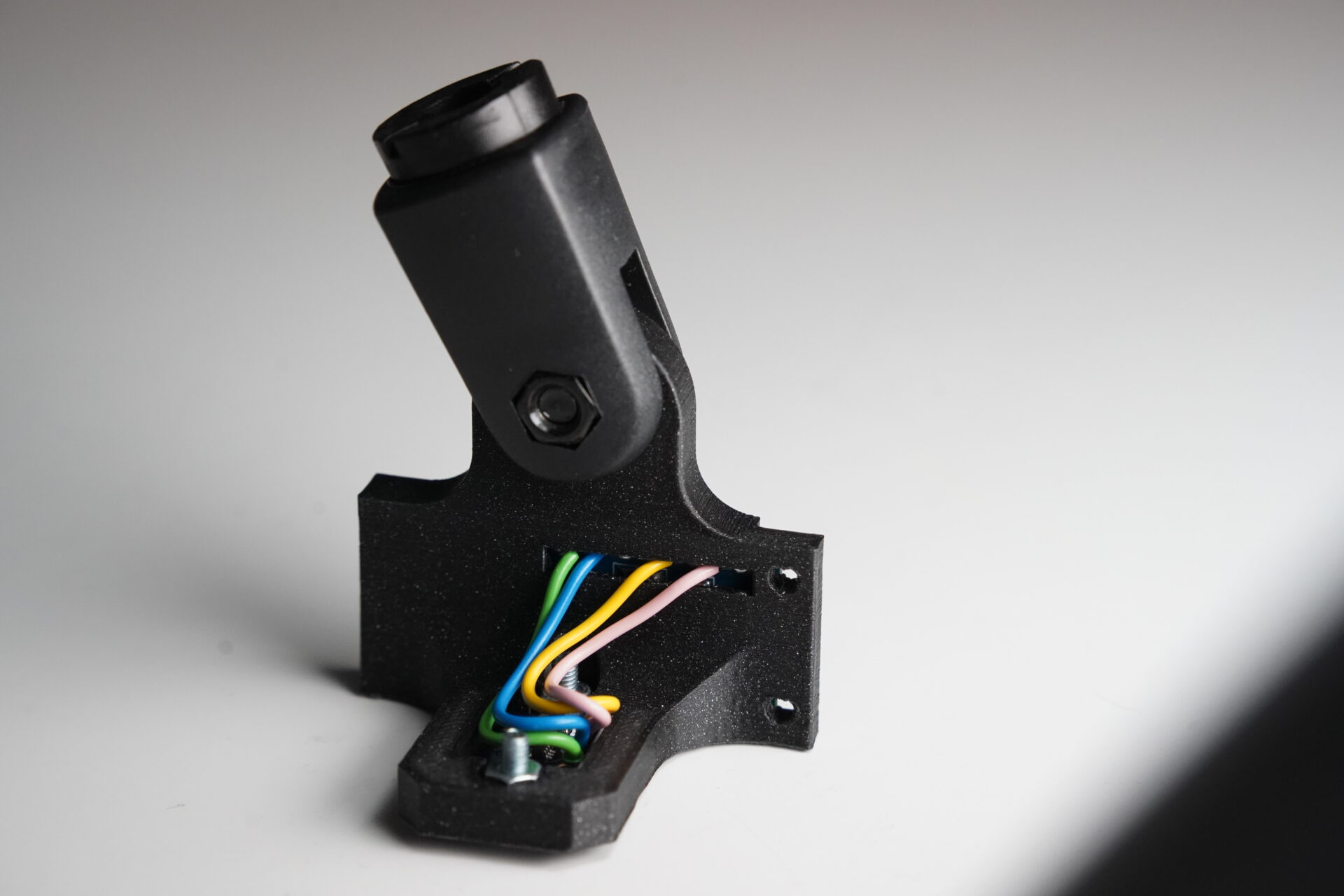
To meet these requirements, optical Time-of-Flight (ToF) sensors were employed. These sensors were embedded via 3D printing into a custom-designed mount, which can be affixed to a conventional microphone stand and incorporates an integrated USB interface for direct connectivity. The hardware and software were developed to ensure robust performance in live concert contexts.
Distance Midi Controller in concert
Distance Midi Controller
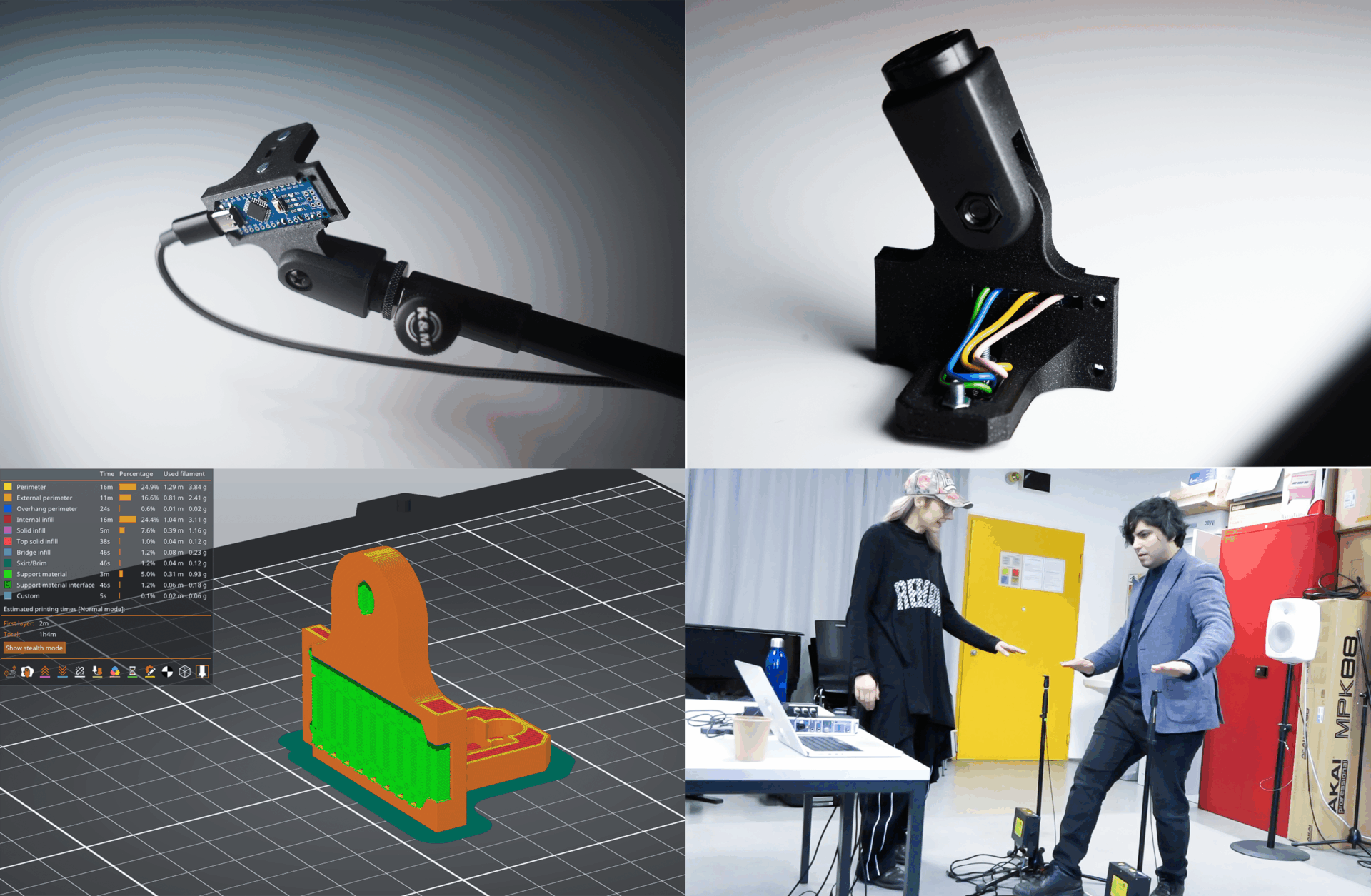
Comprehensive documentation, including construction details and control specifications of the Distance MIDI Controller on GitHub.
Artistic Direction: Brigitta Muntendorf
Programming and Technical Development: Lukas Nowok
Rehearsal with the Distance-Midi-Controller.
Ensemble: Ensemble Offspring Performer: Zubin Kanga
Alongside the artistic work, SOUND OF STORY explored spatial phenomena through a series of artistic experiments, such as spatial polyrhythms and pitch trajectories. These experiments were first conducted directly with a 3D audio system in a studio setting, testing how complex spatialized sound could affect perception and bodily experience. The researchers themselves noticed sensations of dizziness and physical discomfort when confronted with highly intricate spatial information. In a final phase, these experiences were reflected and confirmed through collaborative sessions with students, who reported similar perceptual and bodily responses. In a further test conducted in a larger space with greater distances between the loudspeakers, the experiments were repeated using different material—and the same state emerged here as well. These experiments highlight how immersive spatial sound can shape both bodily and cognitive experience, and inform the design of new auditory performance formats.
3D-Audio Lab “Spatial Spheres” / Darmstädter Ferienkurse 2025 (Video of students)
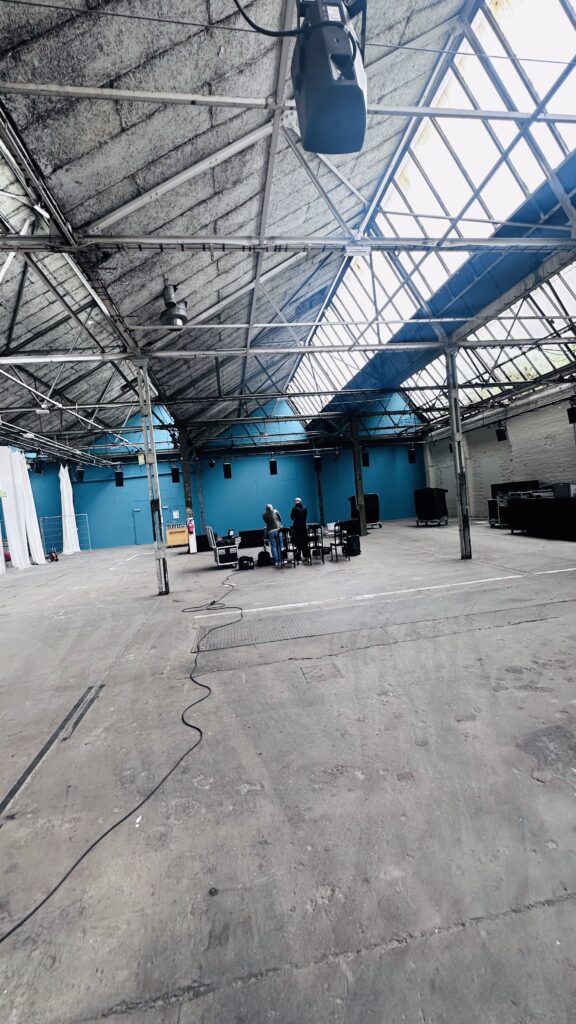
3D-Audio Hall: Try-outs at Sonnenraum Berlin, d&b Showing room
Lessons learned:
– The perception of a destabilization of internal order was tested using spatialized oscillations between 20 opposing loudspeakers positioned at distances of up to 10 meters. Surprisingly, the anticipated effect occurred even despite the relatively large distance between the loudspeakers
– Since the spatializations ft he oscillations can only be fully experienced when the listener is positioned between two opposing loudspeakers, the audience must have sufficient space to move freely. A fully occupied performance venue should therefore be avoided.
– A sustained chord whose tones are subject to spatial movements is not distinguishable in perception from pitch sequences that are distributed throughout the space. This means that movement within the space itself has a stronger influence on perception than the rhythmic and melodic structure ft he source material.
– The time-of-flight sensors react sensitively to stage fog and trigger signals. Therefore, only minimal stage fog may be used when operating the sensors; otherwise, continuous interference will occur.
Artistic, Social, Technological, and Research-based Contributions:
As a combination of the audio-visual performance FORCE IS PRESENT and artistic micro-studies, SOUND OF STORY investigates the interaction between perception and narration in immersive 3D audio environments through the concepts of Environmental Storytelling and Radical Listening. FORCE IS PRESENT seeks to transform the concert into a cultural and perceptual device, examining how technology and society alter the capacity to experience, comprehend, and navigate complex systems of power. From a technological perspective, the project examines how varying spatializations of sound shape perceptual experience.
Artistic, Social, Technological, and Urban Benefits:
FORCE IS PRESENT introduces innovation in 3D audio by linking movement, space, and sound in real time, creating new performance formats and immersive experiences for audiences. It expands performance practice by making the pianist’s physical energy and gestures immediately audible, redefining concepts of presence and musical expression. Technologically, it presents a flexible, low-latency Distance MIDI Controller that operates without additional hardware or complex setups, and its open-source design allows other artists and researchers to reproduce, adapt, and further develop the system. Socio-culturally, the project fosters interdisciplinary work at the intersection of music, technology, and performance art.
Adaptability / interoperability:
The Distance MIDI Controller developed for FORCE IS PRESENT was designed to be highly flexible. Its mount is compatible with standard microphone stands, allowing easy integration into conventional stage setups. Both the hardware and software are shared as open-source, with detailed instructions for assembly and operation. This enables the sensor-based, contact-free trigger system to be easily reproduced and deployed in a variety of performance contexts. The 3D audio environment was developed using d&b Soundscape, but it can be adapted to any spatialization system.
Impact
The specific apparatus and artistic use of the time-of-flight sensor simultaneously enabled the perception of both an interconnection and a separation between force and sound production. In such a configuration, the exercise of power can therefore be attributed neither to the technology nor to the human performer—a condition that encourages oscillation not only musically but also conceptually between two seemingly opposing poles. The musical-narrative presented via 3D audio, which explored physical and technically invisible forms of violence, evoked a similar state. Force is Present can thus be understood as a musical experimental setup that successfully created, through the medium of music, a condition of active reflection on violence.
Repositories