+ WHAT?
The influence of torso tactile stimulation on emotional perception in movies.
+ HOW?
Tactile feedback through a haptic vest based on four main emotions,enhances engagement and accessibility in cinematic experiences.

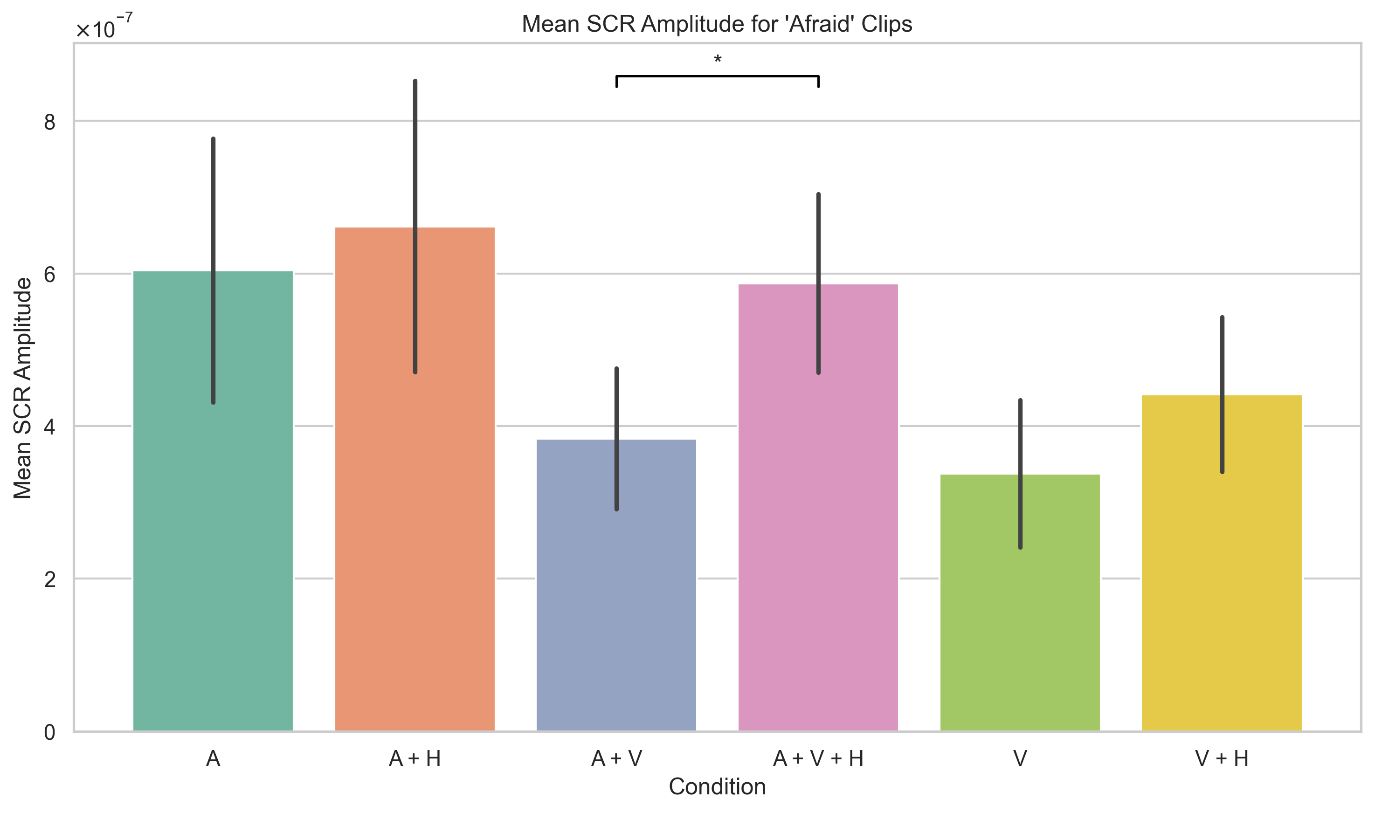
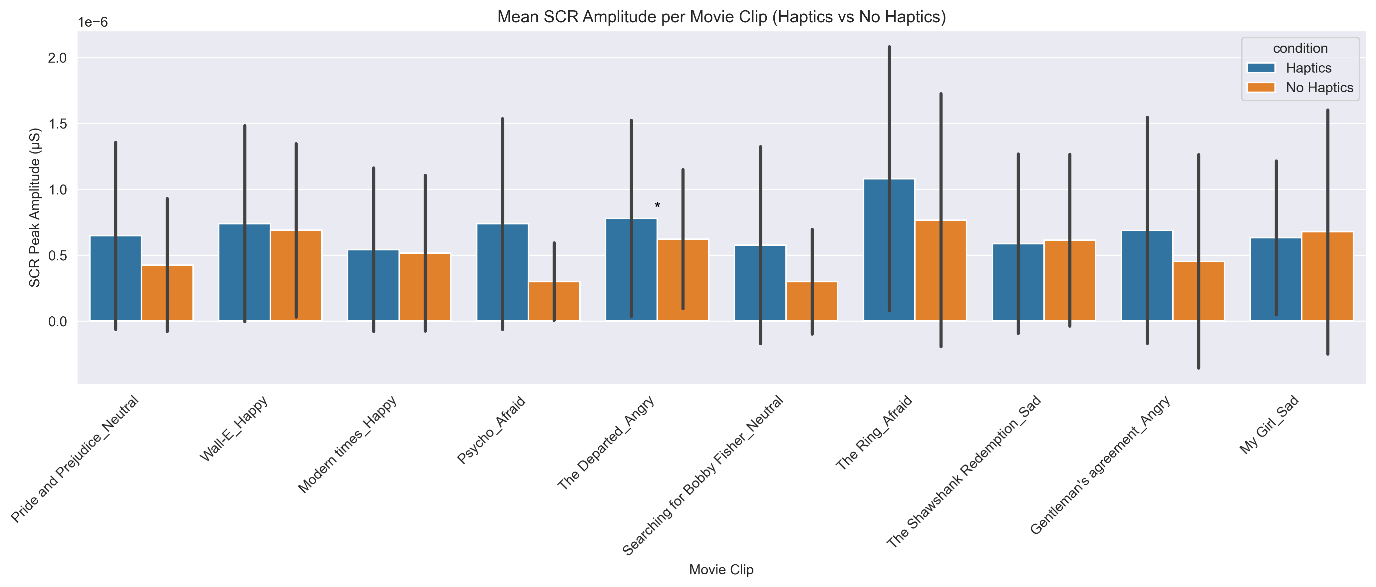
This research explores whether torso-based vibration feedback can influence how emotions are felt during films. Using a haptic vest, the studies show that vibration mainly affects emotional intensity (arousal) rather than clearly conveying positive or negative emotions, suggesting haptics can enhance engagement and accessibility in cinematic experiences.
haptic feedback, emotions, bHaptics, physiological arousal, vest
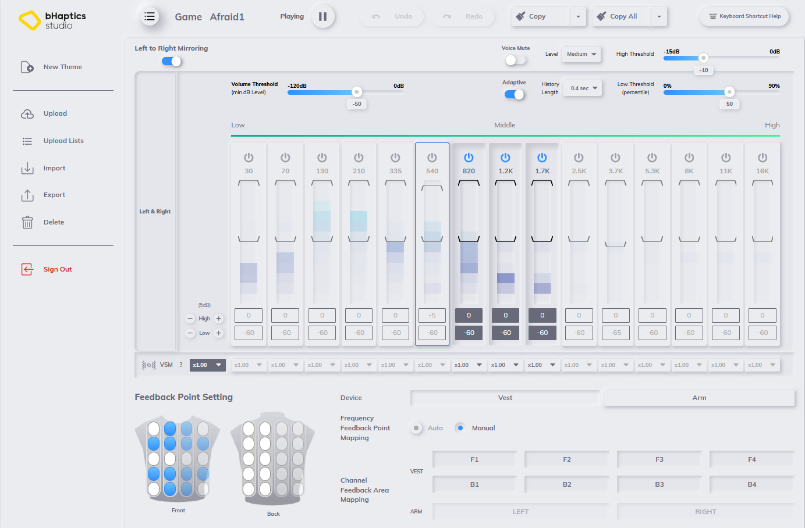
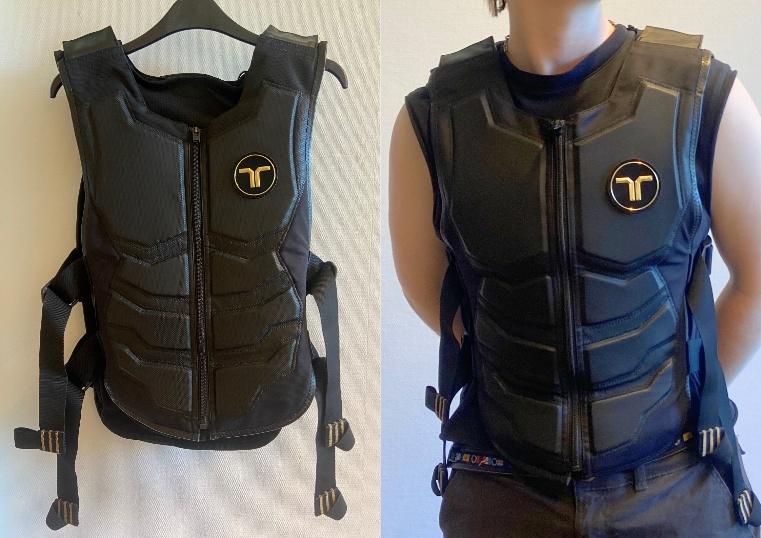
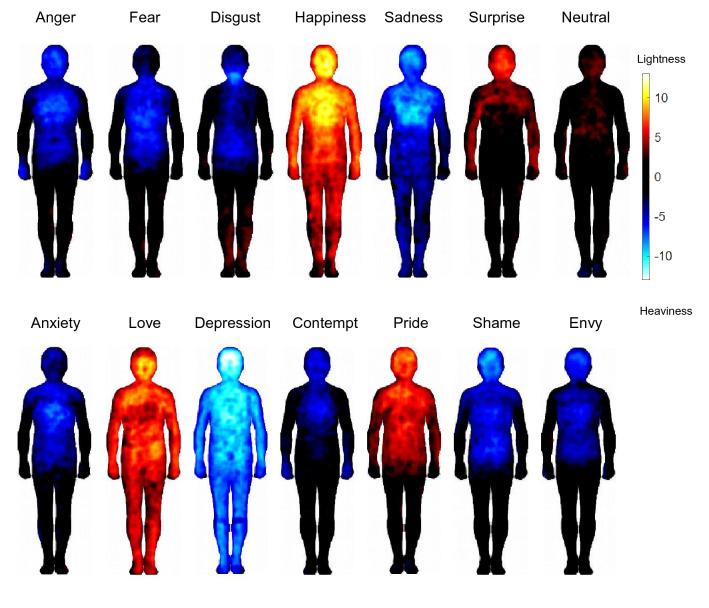
As part of the experimental setup, participants used the bHaptics Tactsuit X40 haptic vest, which delivers programmable torso-based vibrations. Using bHaptics Studio and principles from Bodily Sensation Mapping, custom vibration patterns were designed and tested for four emotional states (Happines, Sadness, Fear, Anger), with 2-3 patterns created for each emotion.
Design Methods & Frameworks
1. Creating a Haptic Profile
– Open bHaptics Studio
– Create a new project or open an existing one.
– Use the editor timeline to place vibration points on the Tactsuit X40 layout.
– Adjust intensity, frequency, duration, and timing of each vibration.
– Preview the haptic pattern using the Play/Test function and refine as needed.
– Save the profile.
2. Exporting a Haptic Profile
– Select Export from the project or file menu.
– Choose .bhc as the export format.
– The profile is now saved as a .bhc file and can be shared or reused.
3. Importing a Haptic Profile
– Click the Import button from the main menu or project view.
– Select the desired .bhc file.
– The imported profile will appear in your project list.
– Load the profile and use the Play/Test function to experience the haptic feedback.
4. Testing and Iteration
– Wear the haptic vest while testing to ensure correct motor placement.
– Make small adjustments to intensity and timing based on comfort,clarity and desired results.
– Updated versions with changes can be re-exported.
These steps allow users to easily create, share, and evaluate haptic profiles within bHaptics Studio.
Additionally, the bHaptics PC Player is the desktop application that connects bHaptics hardware (such as the Tactsuit X40) to a PC and manages real-time haptic playback. It acts as the bridge between software content and the haptic device.
Main Functions
- Device Connection & Management:
Detects, pairs, and manages bHaptics devices via Bluetooth or USB, showing battery status and connection state. - Real-Time Haptic Playback:
Receives haptic signals from supported games, applications, or custom software and plays them on the vest in real time. (there are some existing profiles loaded). - Audio-to-Haptics Mode:
Converts system audio into vibrations, allowing the vest to respond dynamically to sound (e.g., films, music, or non-supported apps). - Profile & Intensity Control:
Allows users to adjust global intensity levels, enable or disable devices, and select preset haptic modes. - Testing & Calibration:
Provides basic tools to test motors and ensure the vest is functioning correctly.
In short, bHaptics Studio is used to design and export haptic patterns, while the bHaptics PC Player is used to run, control, and experience haptics in real time on a PC.
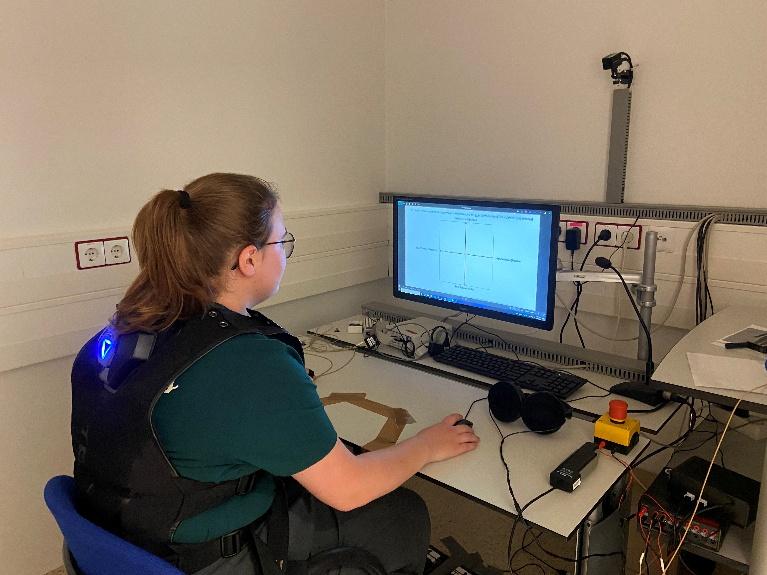
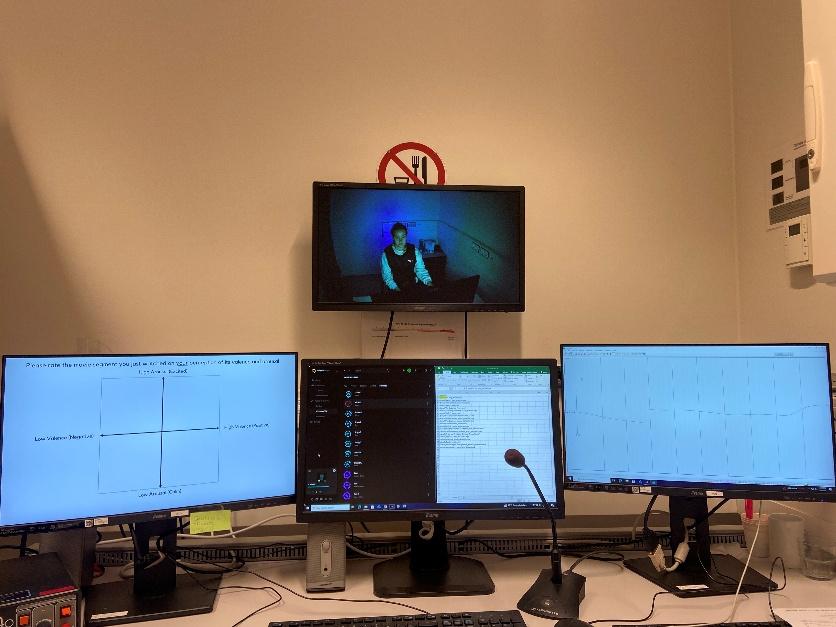
Participants viewed film clips either with or without haptic feedback and, after each trial, rated their experience in terms of perceived valence and arousal. Short clips were presented under six conditions: audio only, video only, audio + haptics, video + haptics, audio + video, and audio + video + haptics. Throughout the experiment, physiological arousal was measured using skin conductance recorded via two electrodes attached to the fingers of the left hand.
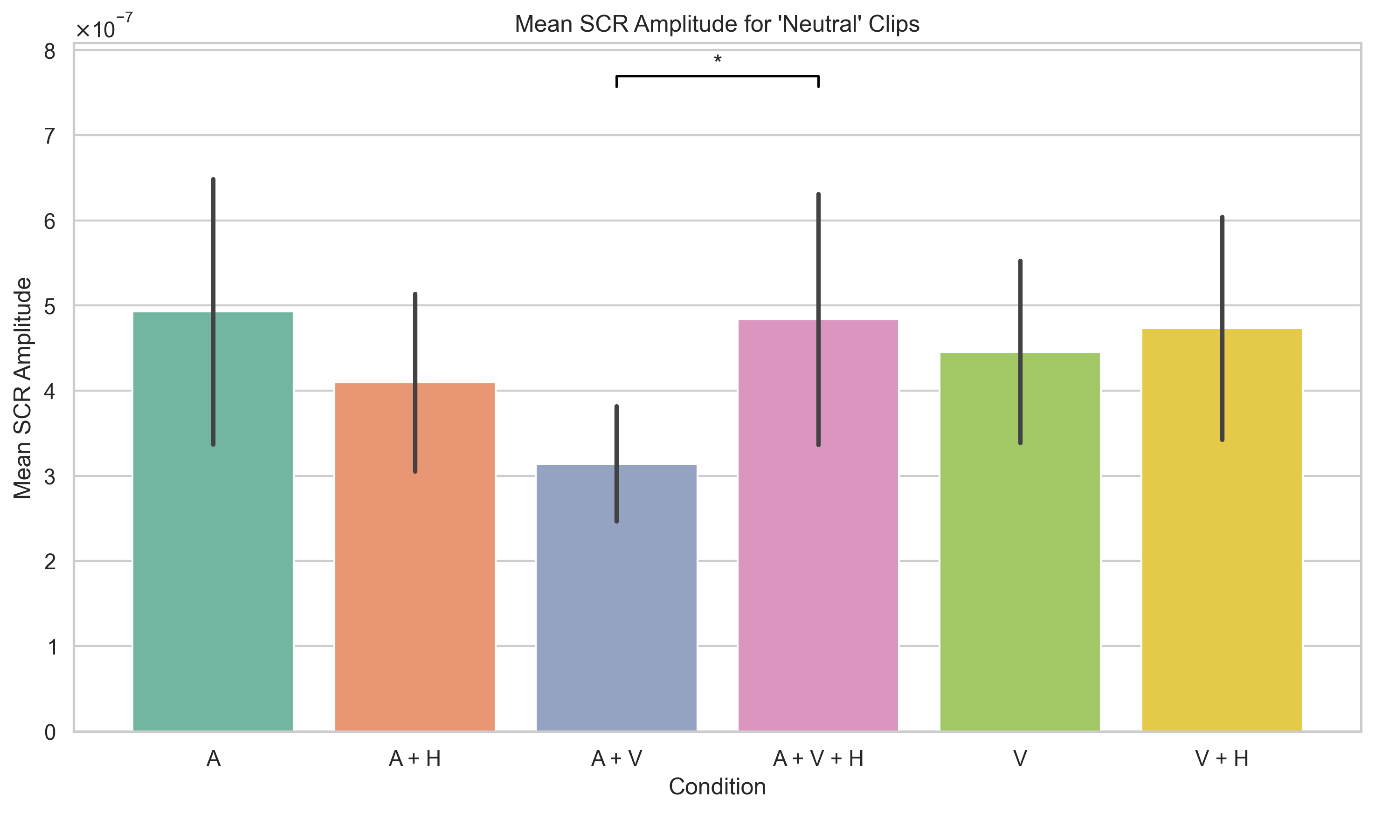
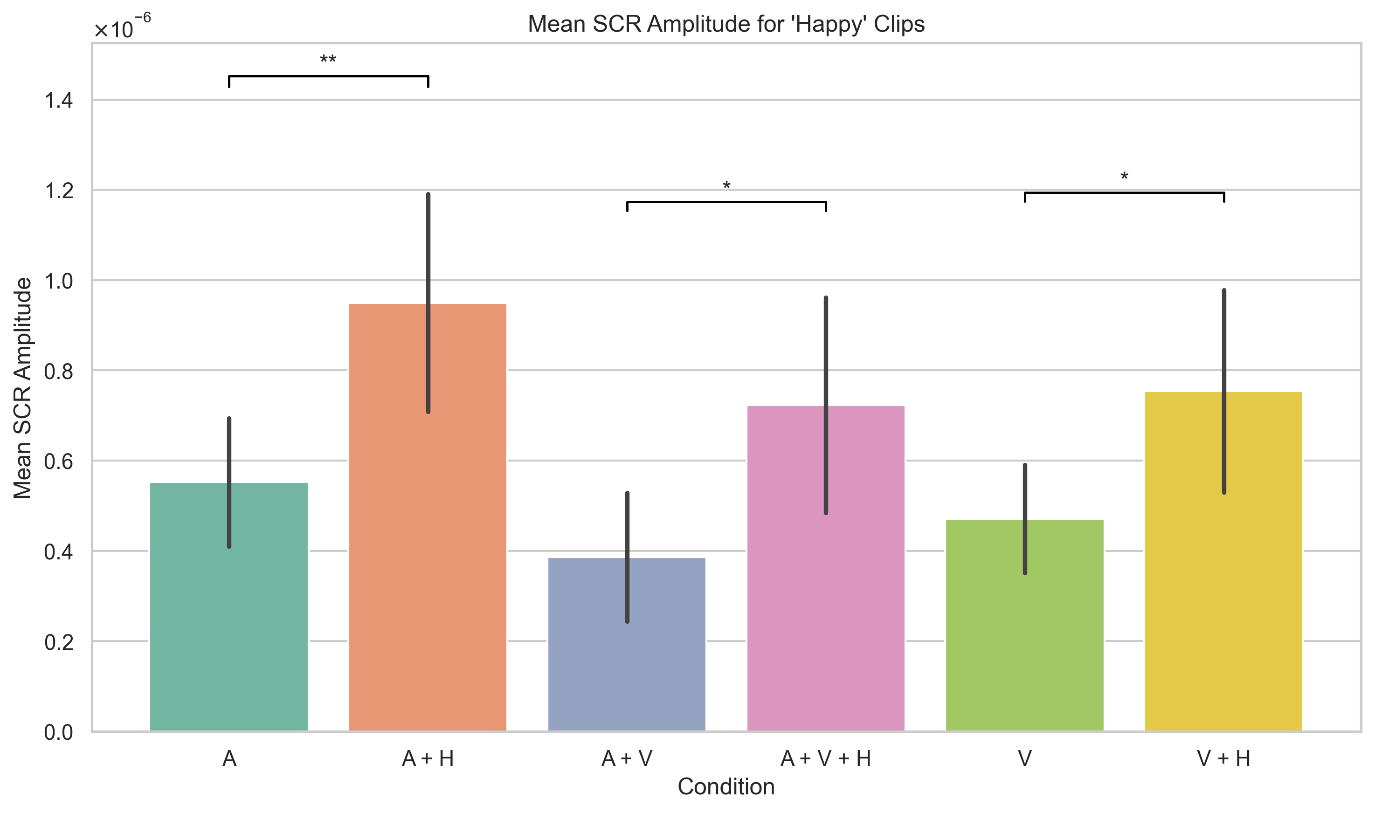
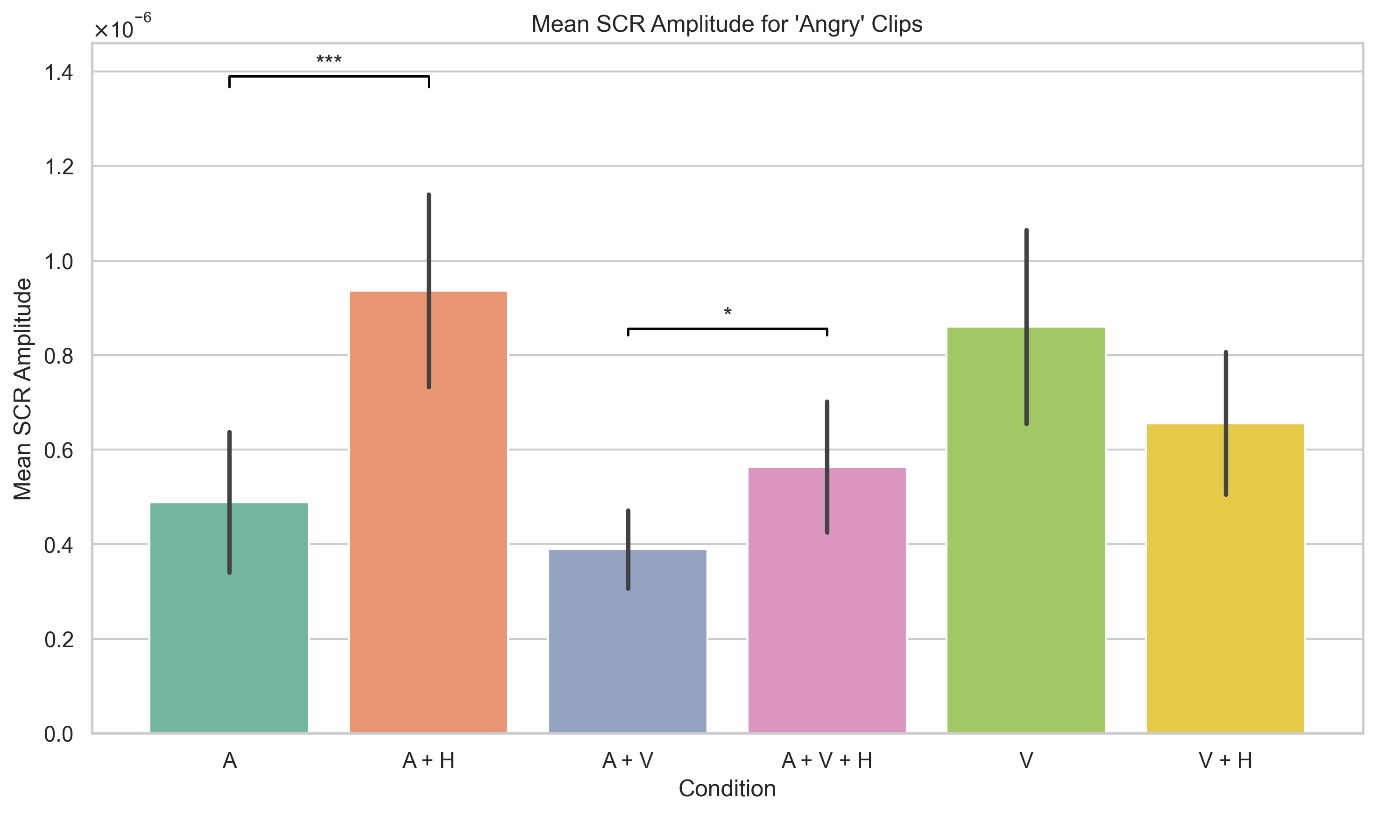
When audio and video were combined, the addition of haptic feedback led to higher skin conductance responses across all emotions. For the longer film clips taken from feature films, haptic stimulation generally increased perceived arousal, though this effect was not consistent across all clips, and a statistically significant increase in skin conductance was observed in only one case. For the shorter clips, adding haptic feedback reduced reported arousal, but only for anger and fear. However, across all emotions, combining haptics with audio and video consistently resulted in higher skin conductance responses. Notably, for happy clips, adding haptics increased skin conductance in the audio + video, audio-only, and video-only conditions.
Artistic, Social, Technological, and Urban Benefits:
The haptic vest introduces a new expressive layer to audiovisual media, enabling artists and creators to design multisensory experiences that go beyond sight and sound. It supports more inclusive and engaging forms of storytelling by offering alternative ways to convey emotion and intensity through touch.
Adaptability / interoperability:
The system is flexible and can be integrated across different platforms and contexts, including films, games, VR applications, and interactive installations. Its compatibility with existing audio-visual pipelines and customizable haptic profiles allows it to adapt easily to diverse content and user needs.
Impact
By enhancing immersion and emotional engagement, haptic technology can enrich entertainment experiences and improve accessibility for users with sensory limitations. Its use also opens new directions for research, education, and experiential media, highlighting the potential of touch as a meaningful channel in human–computer interaction.